
Key Takeaways
- Java-Native AI integration: Spring AI eliminates the need for complex Python "glue code", allowing developers to build intelligent applications using familiar Java patterns like
@Serviceand@Repository. - Faster Enterprise Adoption: Major Fortune 100 companies are already using Spring AI in production, leveraging its seamless integration with the VMware Tanzu ecosystem and Spring Boot.
- Reduced Latency & Costs: By embedding AI logic directly within microservices rather than relying solely on external orchestration, developers can build more efficient, real-time diagnostic and support tools.
- Future-Ready Scalability: Upcoming roadmaps include support for high-performance open-weight models (Llama 3, Claude 3) and advanced orchestration features like AI-augmented API gateways.
- Production-Grade Features: Beyond simple chat, Spring AI provides "enterprise-ready" tools for Vector Stores, Retrieval-Augmented Generation (RAG), and model evaluation to prevent hallucinations.
The world of Java development is evolving at an unprecedented pace, and the latest revolution comes from the Spring Framework, specifically Spring AI. This groundbreaking module is set to transform how developers build intelligent applications by seamlessly integrating artificial intelligence into the Spring ecosystem.
In this article, we’ll explore how Spring AI will reshape Java development, microservices, and real-world problem-solving.
How Spring AI Will Transform Java Development
Why Spring AI is a Game-Changer
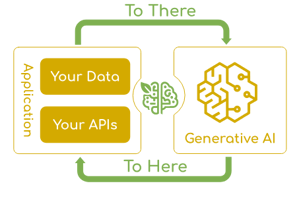
Traditionally, integrating AI into Java applications required complex setups, Python interoperability, or external microservices. Spring AI changes that by bringing AI directly into the Spring ecosystem, allowing Java developers to:
-
Build intelligent applications effortlessly
-
Minimise reliance on external AI orchestration
-
Leverage familiar Spring patterns such as
@Serviceand@Repository

Spring Boot microservices can now embed intelligence natively:
-
Intelligent chatbots for customer support
-
Automated document processing (contracts, invoices)
-
Predictive analytics for real-time decision-making
Instead of calling external APIs, AI logic lives inside your Spring services, reducing latency and costs. For a working integration, developers can explore the Spring AI samples on GitHub
Imagine a customer support microservice that dynamically generates responses using AI instead of hard-coded templates. Or a document-processing service that extracts key terms from contracts without manual rules. Spring AI makes these scenarios not just possible but straightforward to implement.
How Developers Are Reacting
The Java community is buzzing with excitement. Developers who once saw AI as a "Python-dominated" field now have a first-class way to integrate AI in Java. Early adopters report:
-
Faster prototyping (AI features in minutes, not weeks)
-
Cleaner architecture (no more glue code for Python/Java interop)
-
Better scalability (native Spring integration means better performance)
Interest in Spring AI has surged across community forums and enterprise workshops since its 1.0 release.

Notable industry voices weigh in on the following blog articles:
Dan Dobrin, Enterprise App Modernisation Architect, Google.
Josh Long, Spring Developer Advocate, Broadcom
"Spring AI Enables Quick Delivery of Intelligent Apps in Java"
Camille Crowell-Lee, Marketing Lead for AI solutions at VMware Tanzu by Broadcom
Chris Sterling, CEO and Founder at Worldweaver Ltd.
Real-World Use Cases for Spring AI
While Spring AI is still an emerging project, enterprise adoption is already underway, particularly among companies leveraging the broader VMware Tanzu ecosystem. Notably, a Fortune 100 U.S.-based manufacturing company has deployed Spring AI in full production, enabling over 500 developers to build generative AI applications at scale. These applications span a variety of use cases—from intelligent assistants to internal tools grounded in proprietary data—showcasing Spring AI’s readiness for real-world enterprise environments.

VMware reports that companies are using Spring AI alongside vector stores, retrieval-augmented generation (RAG), and secure AI infrastructure to accelerate the delivery of agentic applications. These use cases demonstrate how Spring AI streamlines integration with LLMs while maintaining the conventions of Spring Boot, making it accessible to Java developers seeking to incorporate production-grade AI features.
Source: VMware Tanzu Blog, Broadcom Press Release, Spring AI 1.0 Overview
The Future of Spring AI: Where Innovation Meets Enterprise Adoption
As Spring AI evolves from its initial release into a mature framework, its roadmap reveals exciting possibilities that will reshape how enterprises build and deploy AI-powered applications. Here’s what to expect as the project matures:
1. Expanded AI Model Integrations
Spring AI will broaden its support beyond OpenAI and Hugging Face to include cutting-edge open-weight models, such as Mistral 7B, Llama 3, and Claude 3, enabling developers to choose the best model for their use case—whether it’s cost efficiency, multilingual support, or domain-specific fine-tuning. Future updates may also introduce specialised enterprise models for industries like legal, healthcare, and finance, allowing businesses to run proprietary AI while maintaining data privacy.
2. Tighter Spring Cloud Integration
The next phase of Spring AI will focus on AI-powered microservices at scale, with seamless integration into Spring Cloud Gateway, Config, and Circuit Breaker. Imagine:
-
Auto-scaling AI workloads in Kubernetes based on demand spikes
-
Distributed prompt engineering, where different microservices contribute to complex AI workflows
-
AI-augmented API gateways that dynamically optimise responses using LLMs
This will make it easier than ever to build AI-native distributed systems without managing brittle glue code.

3. Enterprise-Grade AI Adoption
Expect banks, healthcare providers, and SaaS platforms to lead the charge in embedding Spring AI into their core systems. Potential scenarios include:
-
Financial institutions use AI-enhanced fraud detection that learns from transaction patterns in real time
-
Healthcare providers deploying AI-assisted diagnostics within HIPAA-compliant Spring Boot applications
-
E-commerce platforms leveraging retrieval-augmented generation (RAG) to deliver hyper-personalised shopping experiences
As Spring AI matures, we’ll also see:
-
Fine-tuning as a service for domain-specific model optimisation
-
AI governance tools for compliance and auditability
-
Edge AI support, enabling on-device intelligence for IoT and mobile applications
4. The Long-Term Vision: AI as a Core Spring Module
In the coming years, Spring AI won’t just be an add-on; it will become as fundamental as Spring Data or Spring Security. While not officially announced, the following are potential features being discussed by the Spring AI community that future releases may introduce:
-
@AIServiceannotations for automatic AI agent creation -
Prompt versioning and A/B testing may be integrated into Spring Cloud's future releases
-
Federated learning support for privacy-preserving model training
The end goal? Making AI integration as simple as adding a database, while maintaining Spring’s trademark reliability and developer experience.
Final Thoughts

Spring AI is not just another library; it’s the beginning of AI-native Java applications. Whether you're a seasoned Spring developer or a business leader exploring AI, this innovation opens doors to more intelligent and scalable software.
The question is no longer "Can Java do AI?" but "How fast can you adopt it?"